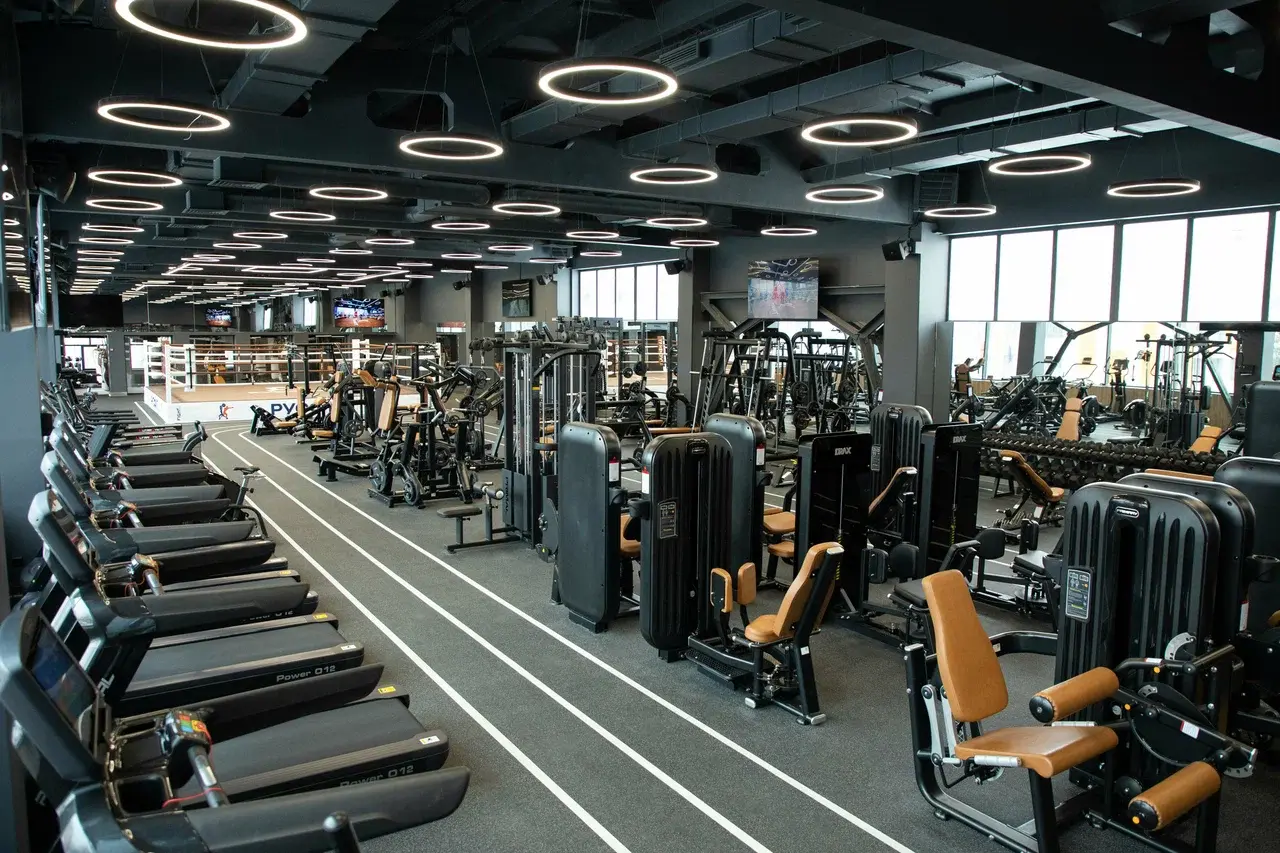
When the Ecomanagement team first arrived at the Rusfit facility in Kirzhach Technopark, the logic was simple: a fitness centre is the most demanding possible testing ground for the system. Changing rooms, an air handling unit room, a swimming pool, and a cycling studio all operate simultaneously — and each zone follows its own energy consumption logic. That stage is now complete: all necessary equipment and feedback sensors have been installed, and the installation works are finished. Kirzhach becomes the third technopark in the company's portfolio, following World Class Skolkovo and Innopolis — and each new facility confirms that the platform performs with equal confidence in a premium Moscow fitness club and in an industrial technopark an hour and a half from the capital. Installation began on 15 June and proceeded on schedule; though the rooftop, the air handling unit room, and both changing rooms proved to have character of their own — architectural peculiarities required a switch to wireless solutions, without a single compromise on functionality.
A fitness centre here is no accident but a pattern: it is precisely this type of facility that Ecomanagement traditionally uses to enter a new site, since it allows the platform's full functionality to be demonstrated within a matter of weeks and produces a result that can serve as a reference going forward. The project is being delivered under an energy service contract (ESCO) model: Ecomanagement invests in the equipment and installation, recovering that investment through a share of the verified energy savings — meaning Rusfit has not put a single rouble of its own capital into the system. Full completion of the project — lighting control, ventilation integration, and commissioning — is expected in the first week of July.
And now comes the most interesting part: the system is moving into a monitoring and data-collection phase. This data is needed to build a digital model of the facility, establish a consumption baseline, and subsequently train energy-efficiency algorithms and load forecasting models. In parallel, this process functions as a full engineering audit of the facility: even at the data-collection stage, the team is identifying poor electrical contacts, wiring overheating caused by incorrectly sized cabling, and structural shortcomings in the engineering systems — all within the scope of a single contract, with no separate line item for the inspection. For the facility owner, this means that digitalising energy consumption and conducting a technical audit of the engineering systems come as a single package rather than two separate contracts.
The technopark itself houses over 100 resident companies under one roof, and that is precisely what makes Kirzhach interesting not as a one-off project but as a point of entry: based on industry benchmarks, comparable automation delivers 15–30% savings on energy and climate control, and at the scale of the entire technopark, the figures could run into millions of roubles a year.
For Ecomanagement, Kirzhach is not just another facility in the portfolio, but a live demonstration of how digital engineering management performs on the site of one of the country's largest climate control equipment manufacturers. And if the first fitness centre is already proving its economics, the conversation naturally moves on to the next question: what if the entire technopark worked this way?
A fitness centre here is no accident but a pattern: it is precisely this type of facility that Ecomanagement traditionally uses to enter a new site, since it allows the platform's full functionality to be demonstrated within a matter of weeks and produces a result that can serve as a reference going forward. The project is being delivered under an energy service contract (ESCO) model: Ecomanagement invests in the equipment and installation, recovering that investment through a share of the verified energy savings — meaning Rusfit has not put a single rouble of its own capital into the system. Full completion of the project — lighting control, ventilation integration, and commissioning — is expected in the first week of July.
And now comes the most interesting part: the system is moving into a monitoring and data-collection phase. This data is needed to build a digital model of the facility, establish a consumption baseline, and subsequently train energy-efficiency algorithms and load forecasting models. In parallel, this process functions as a full engineering audit of the facility: even at the data-collection stage, the team is identifying poor electrical contacts, wiring overheating caused by incorrectly sized cabling, and structural shortcomings in the engineering systems — all within the scope of a single contract, with no separate line item for the inspection. For the facility owner, this means that digitalising energy consumption and conducting a technical audit of the engineering systems come as a single package rather than two separate contracts.
The technopark itself houses over 100 resident companies under one roof, and that is precisely what makes Kirzhach interesting not as a one-off project but as a point of entry: based on industry benchmarks, comparable automation delivers 15–30% savings on energy and climate control, and at the scale of the entire technopark, the figures could run into millions of roubles a year.
For Ecomanagement, Kirzhach is not just another facility in the portfolio, but a live demonstration of how digital engineering management performs on the site of one of the country's largest climate control equipment manufacturers. And if the first fitness centre is already proving its economics, the conversation naturally moves on to the next question: what if the entire technopark worked this way?